Hamburg
The Captain and Ann BarbaraHamburg occupies a pivotal place in Mary Antin's account of her family's emigration from the Pale of Settlement to America. It was the designated port for their voyage, the destination of their overland route across the German border, and the site of their most severe trial before reaching the sea. The city functions in the narrative as a kind of purgatory—a place of detention, disinfection, and humiliation that stands between the familiar world of Polotzk and the unknown promise of America. It is here that the family's journey nearly foundered, not on the ocean, but on the bureaucratic machinery of European emigration control.
The Route to Hamburg
The family's journey to Hamburg began in early April, on a gray wet morning, when they set out from Polotzk for the frontier. Their route lay over the German border, with Hamburg as their port of embarkation. Before reaching the frontier, they made a farewell visit to Vilna, where Mary's mother had a brother. In Mary's contemporaneous account, written to her uncle during her first months in America, Vilna is slighted in her description, with special mention made of only two things: the horse-cars and the bookstores. The journey itself was undertaken with a trifling sum of money, the steamer ticket, and a foreign passport as the magic agents by which they hoped to span the five thousand miles of earth and water between them and Mary's father, who had already emigrated to Boston. The passport was supposed to pass them over the frontier without trouble, but because of the prevalence of cholera in some parts of the country, the poorer sort of travelers, such as emigrants, were subjected to more than ordinary supervision and regulation.
Arrival and the Ride Through the City
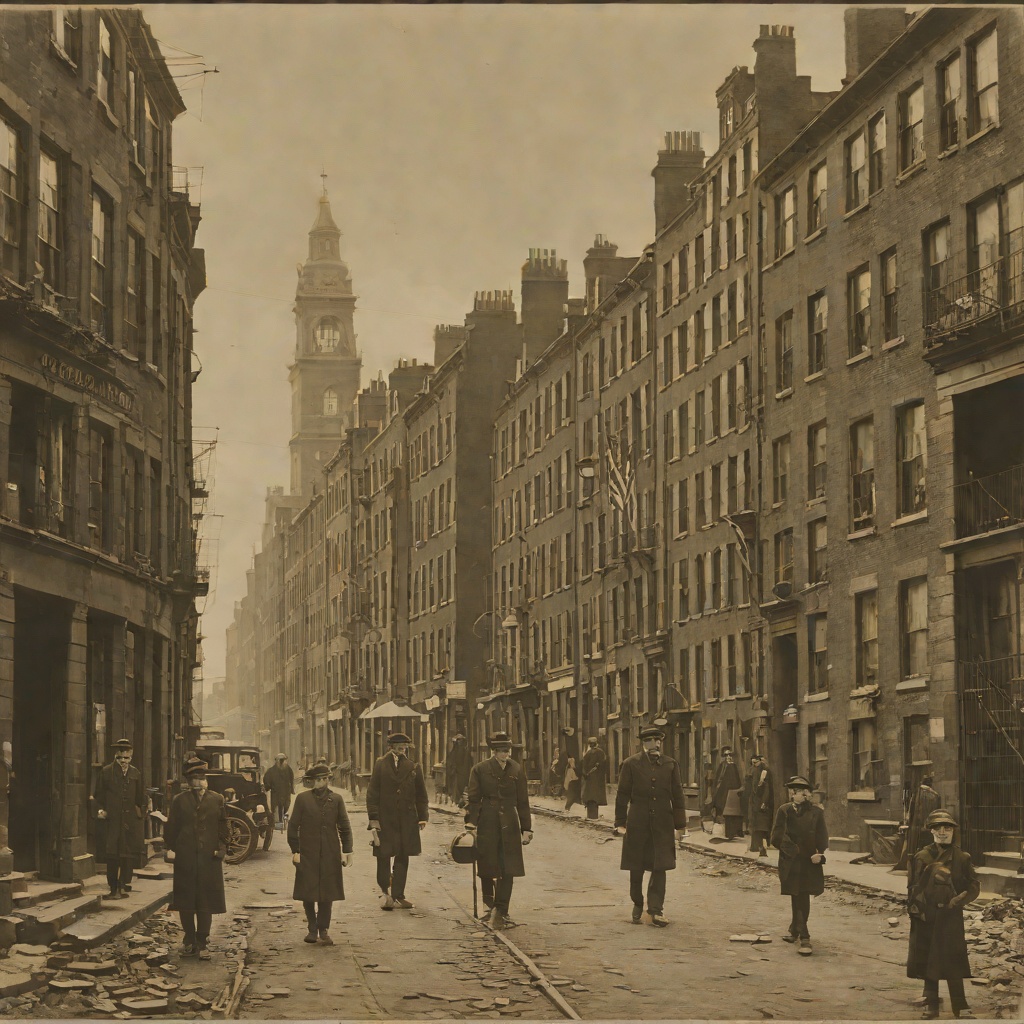
The family arrived in Hamburg early one morning, after a long night in crowded cars. They were marched up to a strange vehicle—long, narrow, and high, drawn by two horses and commanded by a mute driver. They were piled onto this wagon, their baggage thrown after them, and they started on a sight-seeing tour across the city of Hamburg. The sights Mary faithfully enumerated for her uncle's benefit included little carts drawn by dogs and big cars that run of themselves, later identified as electric cars. The humorous side of their adventures did not escape her; again and again she came across a laugh in the long pages of her historic epistle. The description of the ride through Hamburg ended with a note that the sight-seeing was not all on their side, as many people noticed the strange procession of emigrants.
Quarantine and the Fee
The mysterious ride came to an end on the outskirts of the city, where the family was once more lined up, cross-questioned, disinfected, labelled, and pigeonholed. This was one of the occasions when they suspected they were victims of a conspiracy to extort money from them, for here, as at every repetition of the purifying operations they had undergone, a fee was levied on them, so much per head. Mary's mother, seeing her tiny hoard melting away, had long since sold some articles from their baggage to a fellow passenger richer than she, but even so she did not have enough money to pay the fee demanded of her in Hamburg. Her statement was not accepted, and they all suffered the last indignity of having their persons searched.
The last place of detention turned out to be a prison, which they called quarantine. There was a great deal of it—two weeks of it. Two weeks within high brick walls, several hundred of them herded in half a dozen numbered compartments, sleeping in rows like sick people in a hospital, with roll-call morning and night, and short rations three times a day. There was never a sign of the free world beyond their barred windows, and in their hearts were anxiety, longing, and homesickness, while in their ears was the unfamiliar voice of the invisible ocean, which drew and repelled them at the same time. The fortnight in quarantine was not an episode; it was an epoch, divisible into eras, periods, and events. The greatest event was the arrival of some ship to take some of the detainees away.
The German Treatment and Its Contrast
The treatment the family received in Hamburg stood in stark contrast to their experience of illness in Polotzk. In Polotzk, if cholera broke out, as it did once or twice in every generation, they made no such fuss as did the Germans. Those who died of the sickness were buried, and those who lived ran to the synagogues to pray. The travelers felt hurt at the way the Germans treated them. Mary's mother had nearly died of cholera once as a small girl, but she was given a new name, a lucky one, which saved her. None of them were sick now, yet the gendarmes and nurses always shouted their commands at them from a distance, as fearful of their touch as if they had been lepers. This dehumanizing treatment, the constant suspicion, the fees, and the searches, marked the family's first sustained encounter with the cold machinery of Western European bureaucracy, a stark prelude to the freedoms they hoped to find across the Atlantic.
Significance in the Narrative
Hamburg's significance in the narrative extends beyond its role as a geographical waypoint. It is the place where the family's vulnerability as emigrants was most brutally exposed, where their lack of money and status made them subject to indignities they had not anticipated. The city represents the impersonal, often cruel, forces that governed the movement of poor people across borders in the late nineteenth century. Yet it also serves as a necessary threshold. The two weeks in quarantine, however miserable, were a passage that had to be endured before the family could board the ship that would carry them to their father and to their new life. In the larger arc of Mary Antin's story, Hamburg is the last place where she and her family were treated as objects to be processed rather than as individuals with hopes and dreams. It is the final trial of the Old World, after which the New World, with all its promise, could begin.